–
Britta Marakatt-Labba
Over the past decade, Britta Marakatt-Labba has made an almost unparalleled breakthrough. Her embroidered narratives connect the underworld, the upper world and the ground we walk on, in accordance with the worldview of Sámi mythology. With needle and thread, she stitches together the historical and the symbolic, transforming it all into a breathtaking odyssey. Her motifs revolve around Sámi life in close relationship with nature, but also around colonialism, loss and resistance – about the face of racism, human greed and the lost lands once grazed by the animals.
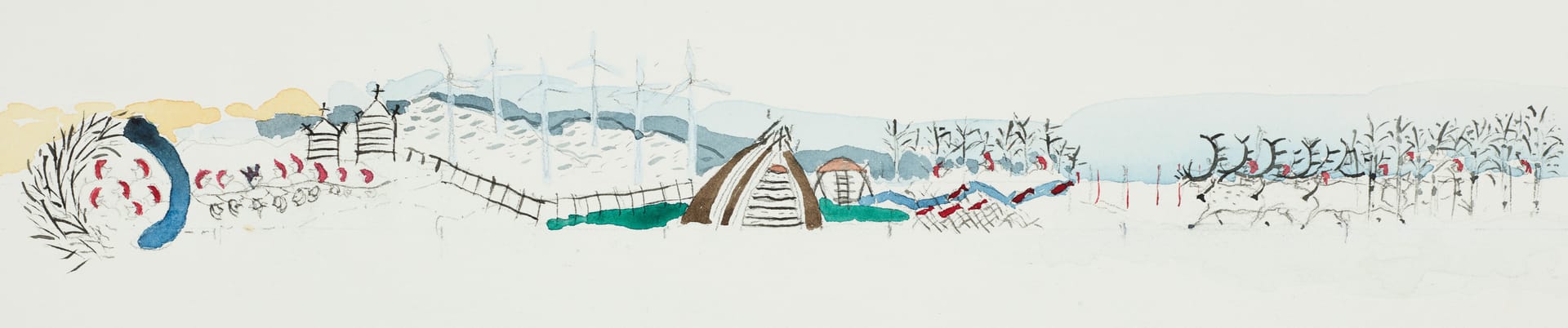
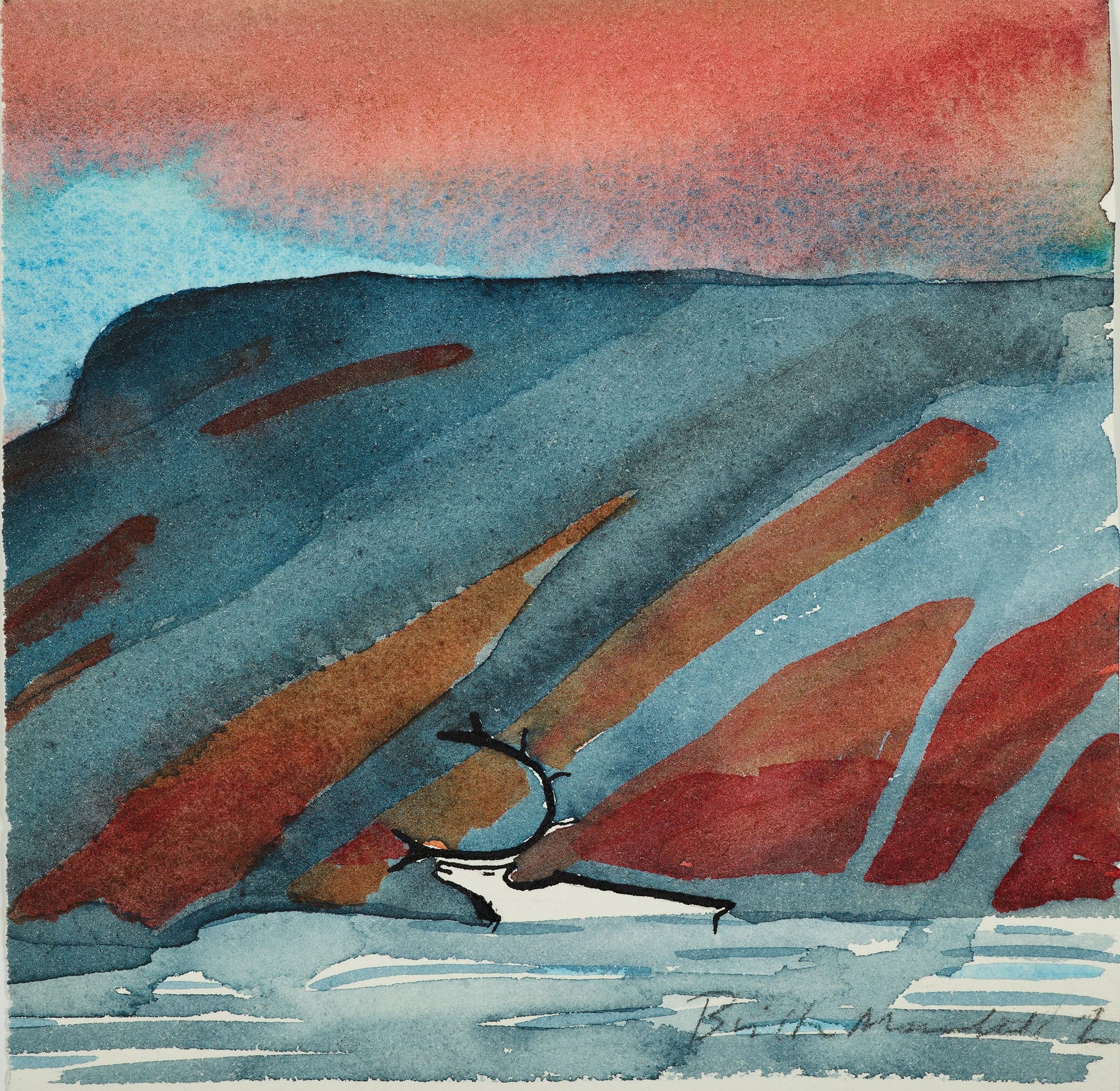
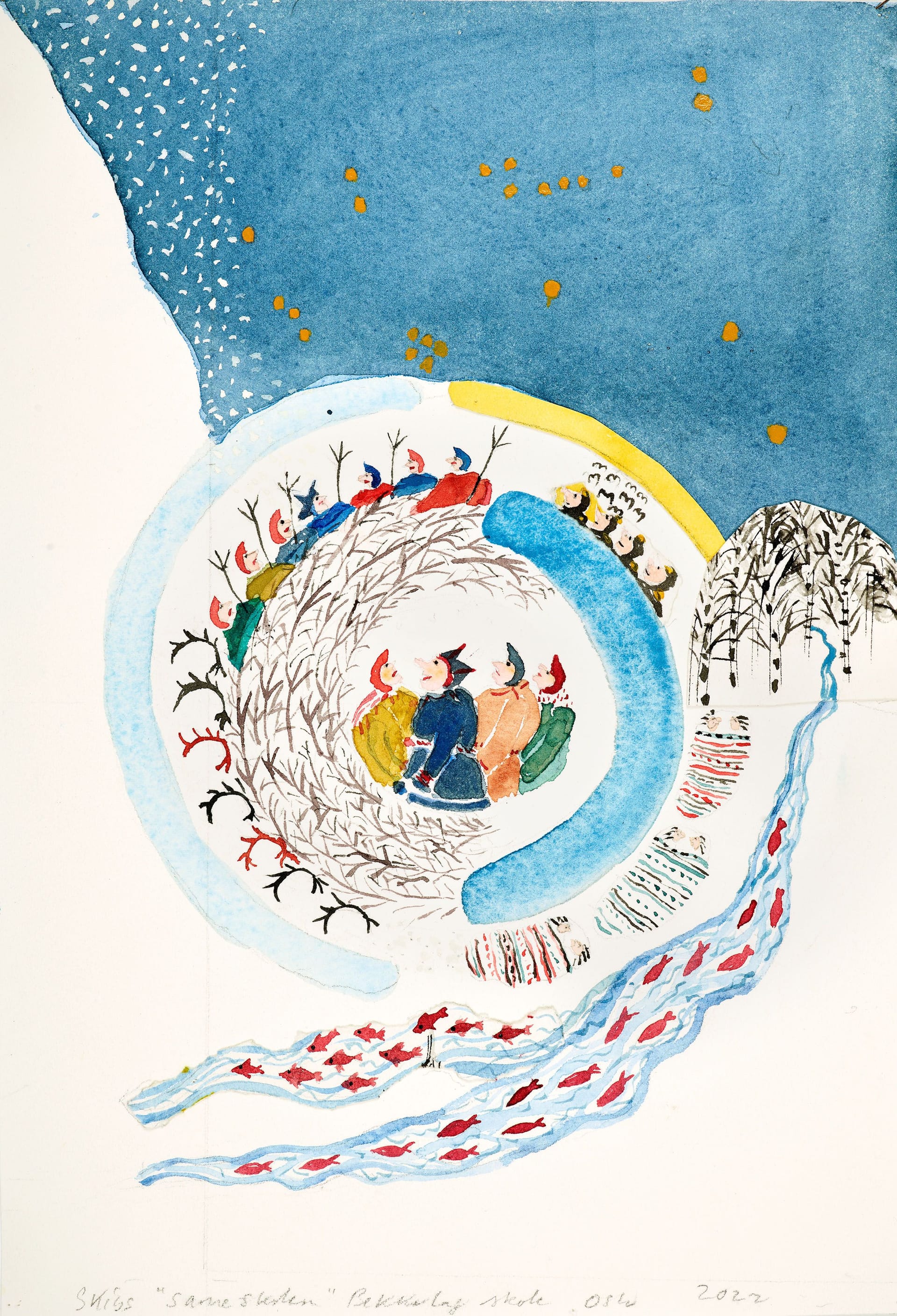
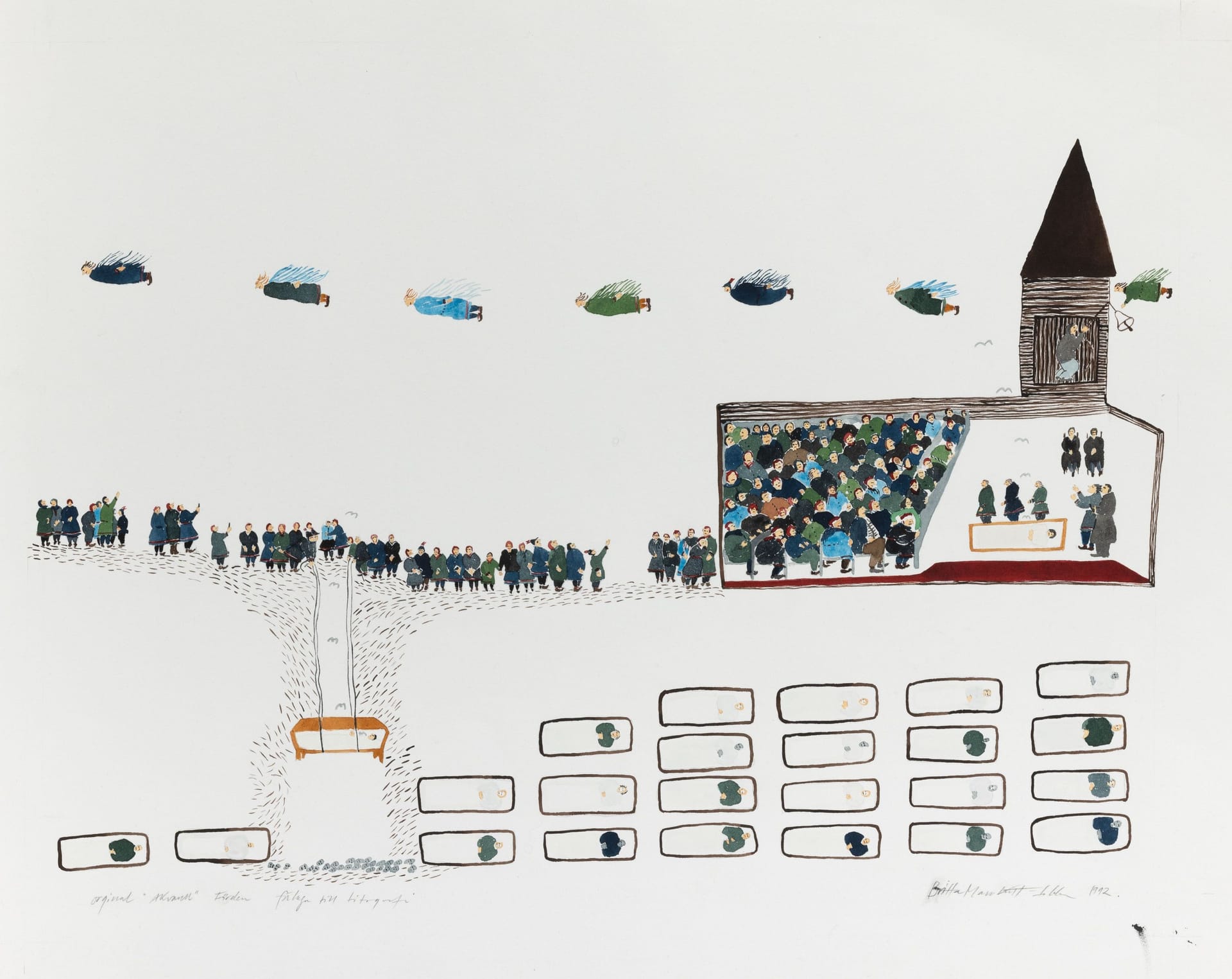
Britta Marakatt-Labba has gained international recognition for her extraordinary embroideries. Among the most celebrated is the 24-metre-long panoramic embroidery Historjá (2003–2007), which depicts Sámi life, history and worldview through tiny stitches on linen. Her drawings and watercolours, however, are almost entirely unknown – works she has kept out of the public eye until now. These delicate, sometimes spontaneous and always evocative images, created largely without any intention of being exhibited publicly, are thematically closely related to her embroideries. Similar motifs recur in the works on paper, but in a new and more intimate form. Here, we follow the development of the artist’s visual language and the emergence of different aesthetic ideas.
The exhibition at The Nordic Watercolour Museum focuses on Britta Marakatt-Labba’s works on paper, which are being shown publicly for the first time. This opens up an entirely new perspective on her artistic practice. The exhibition features around 140 works, primarily watercolours, drawings and sketches, complemented by a selection of embroideries and graphic works.

About the artist
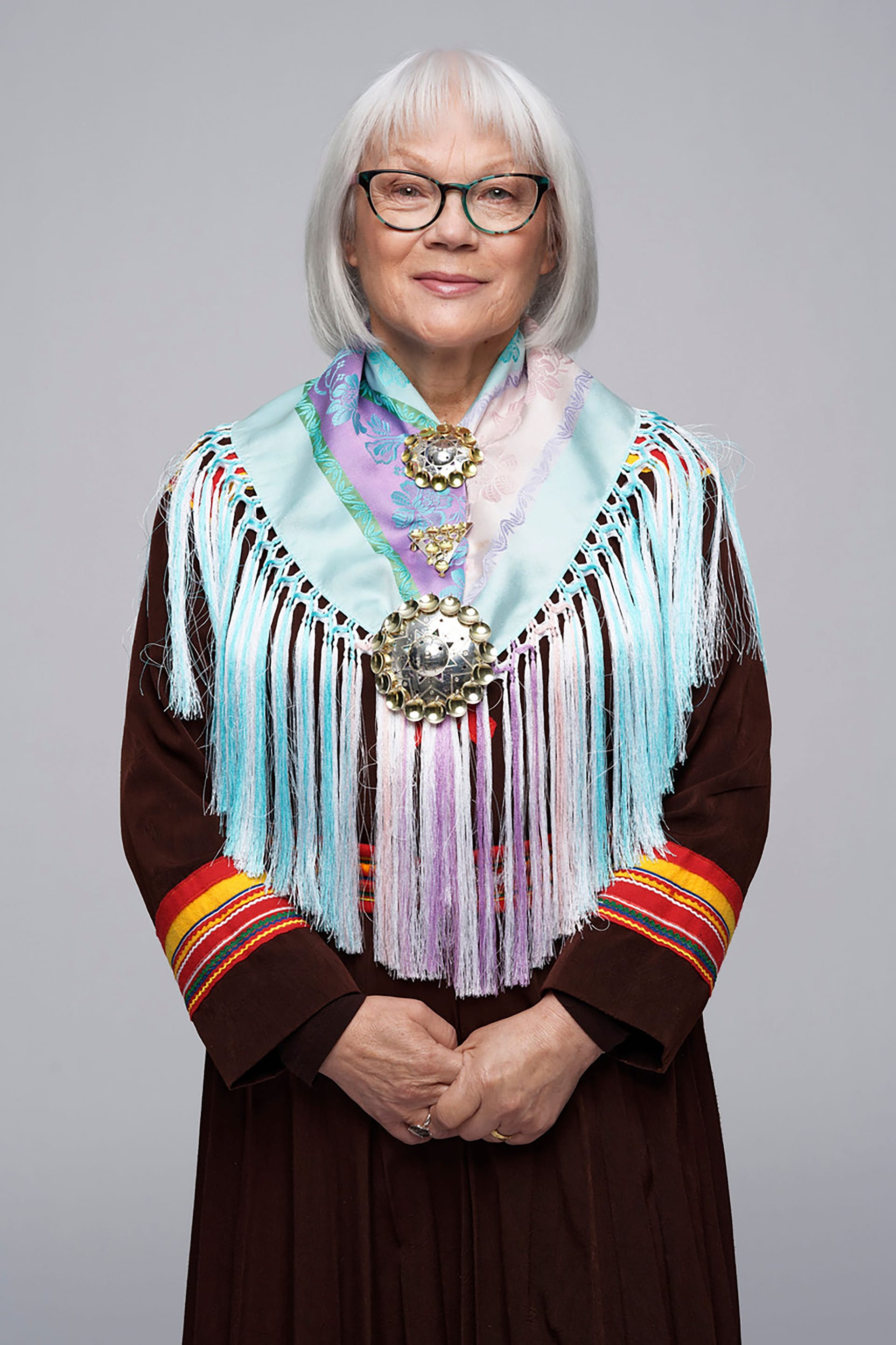
Britta Marakatt-Labba
Britta Marakatt-Labba was born in 1951 in Idivuoma, in Sápmi. She was raised in a family of reindeer herders with North Sámi as her mother tongue. She studied at Sunderby folkhögskola outside Luleå and the School of Design and Crafts at Gothenburg University, before returning to her native region in the late 1970s. In 1978, she co-founded the Máze Group, and helped establish an organisation for artists. In the 1980s, Britta Marakatt-Labba was active in the Alta protests, portrayed in her famous work “The Crows” (1981). Britta Marakatt-Labba is represented in national and regional collections in the Nordic countries since the 1980s. Her international breakthrough came in 2017, when her 24-metre long embroidery “Historjá” (2003–2007) was shown at documenta 14 in Kassel, Germany. Since then, she has received enormous international attention and her works are exhibited all over the world. Britta Marakatt-Labba currently lives and works in Övre Soppero.
"Britta Marakatt-Labba listens with her eyes. Regardless of materials, we hear the trickling water in them, the singing wind, the creaking ice and snow… In the steady, tactile lines of thread and in the soft, flowing watercolour where fluids carry the pigments on their way across the paper, like a river through the mountains."
– Joanna Persman, from the exhibition catalogue